This post was originally published on this site.
The death toll continues to climb in the Spain/ Morocco border crisis. Sixty-seven people reportedly died after tens of thousands of people crossed by land and sea into Ceuta in a single day.
Spanish officials said most of those who entered Ceuta had returned to Morocco, while authorities in Madrid moved to reinforce security, speed repatriation proceedings and maintain cooperation with Moroccan officials against smuggling networks.
Straight Arrow previously cited Spanish officials estimating on Friday about 60,000 entries in 24 hours, and Spain’s Department of National Security briefly posted the figure online before deleting it.
Prime Minister Pedro Sánchez called the situation “an attack on Spain’s territorial integrity” and said it deserved “our most resounding and energetic condemnation.” He said, “all of Spain stands with the people of Ceuta” and pledged to “use all the resources of the State to guarantee security and coexistence.”
In a later post, Sánchez said the government would “guarantee the safety of the residents of Ceuta,” intensify the presence of security forces, deploy “a physical containment barrier in the sea” to facilitate repatriation and maintain cooperation with Moroccan authorities “to continue fighting against the mafias that traffic in human beings.”
In another post, Sánchez said, “Solidarity and empathy are optional. Respect for European treaties and data is not.” Citing Frontex figures for irregular entries from 2021 to 2026, he added, “This is not the time to divide. It is the time to continue building a strong and united EU.”
European Commission President Ursula von der Leyen said on Saturday she held a conference call with commissioners about the situation and wrote that “the vast majority of those who arrived illegally have returned to Morocco, due to the effective work of Spanish and Moroccan law enforcement.”
She said, “not a single person reached mainland Spain or the rest of the EU” and added, “This shows why the control of our European borders matters.”
Von der Leyen said the European Commission had offered support to Spain “from the first moment” and welcomed calls for an extraordinary videoconference “to take stock of what has happened.” She wrote that “fighting illegal migration requires solidarity and a united European response.”
-
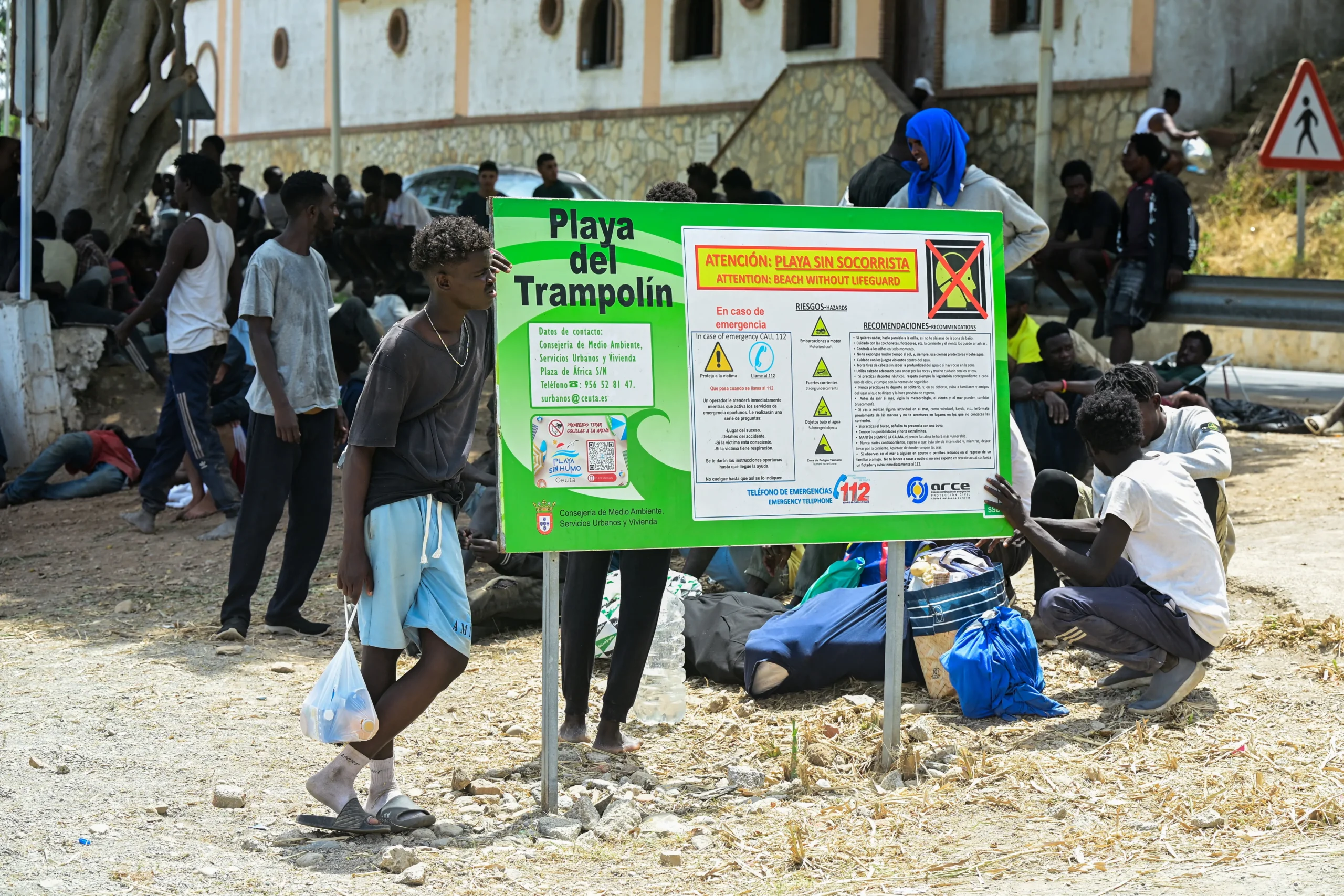
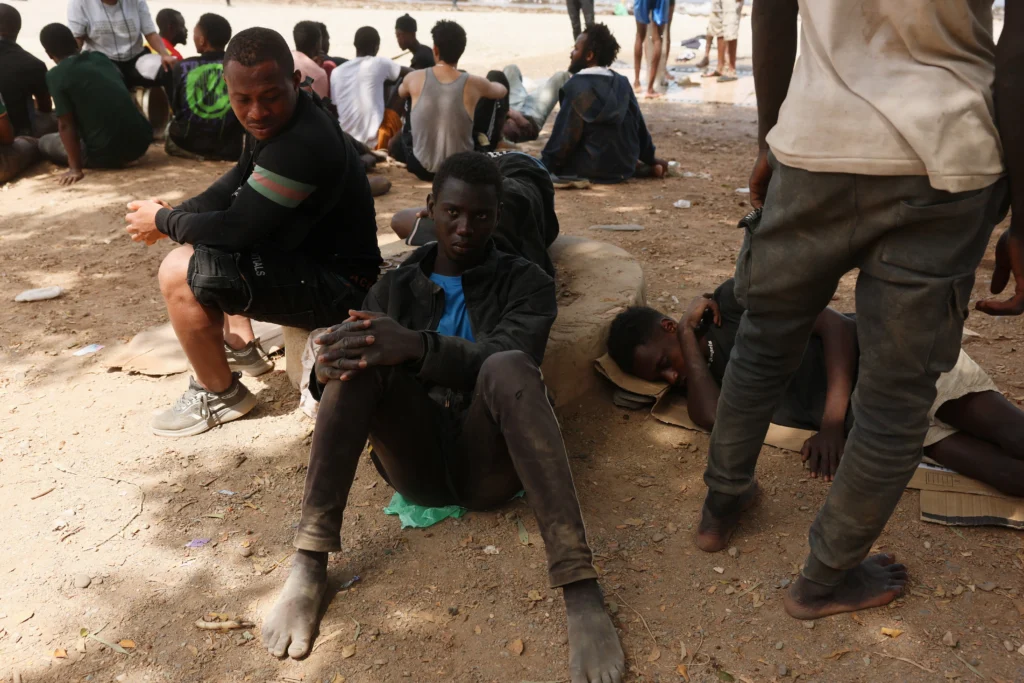
Migrants gather at Playa del Trampolin as they wait to enter a short-stay migrants centre CETI, following mass crossings of migrants on foot and by sea from Morocco into Spanish territory, in Ceuta, Spain, August 1, 2026. REUTERS/Fabian Bimmer -

Spanish soldiers question a migrant, following mass crossings of migrants on foot and by sea from Morocco into Spanish territory, in Ceuta, Spain, August 1, 2026. REUTERS/Fabian Bimmer -
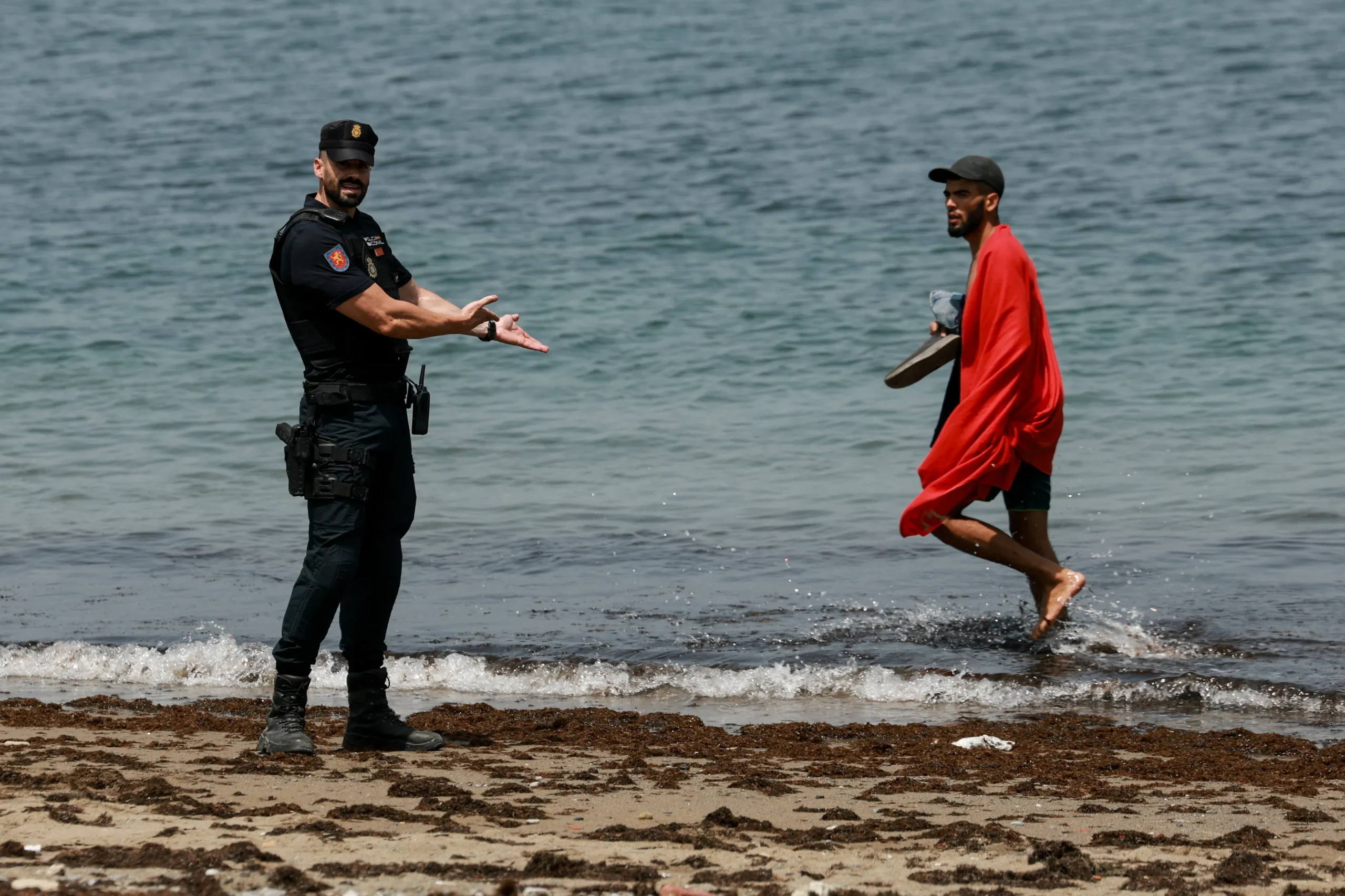
A Spanish police officer gestures as a migrant walks by, following recent mass crossings of migrants on foot and by sea from Morocco into Spanish territory, in Ceuta, Spain, August 1, 2026. REUTERS/Violeta Santos Moura -
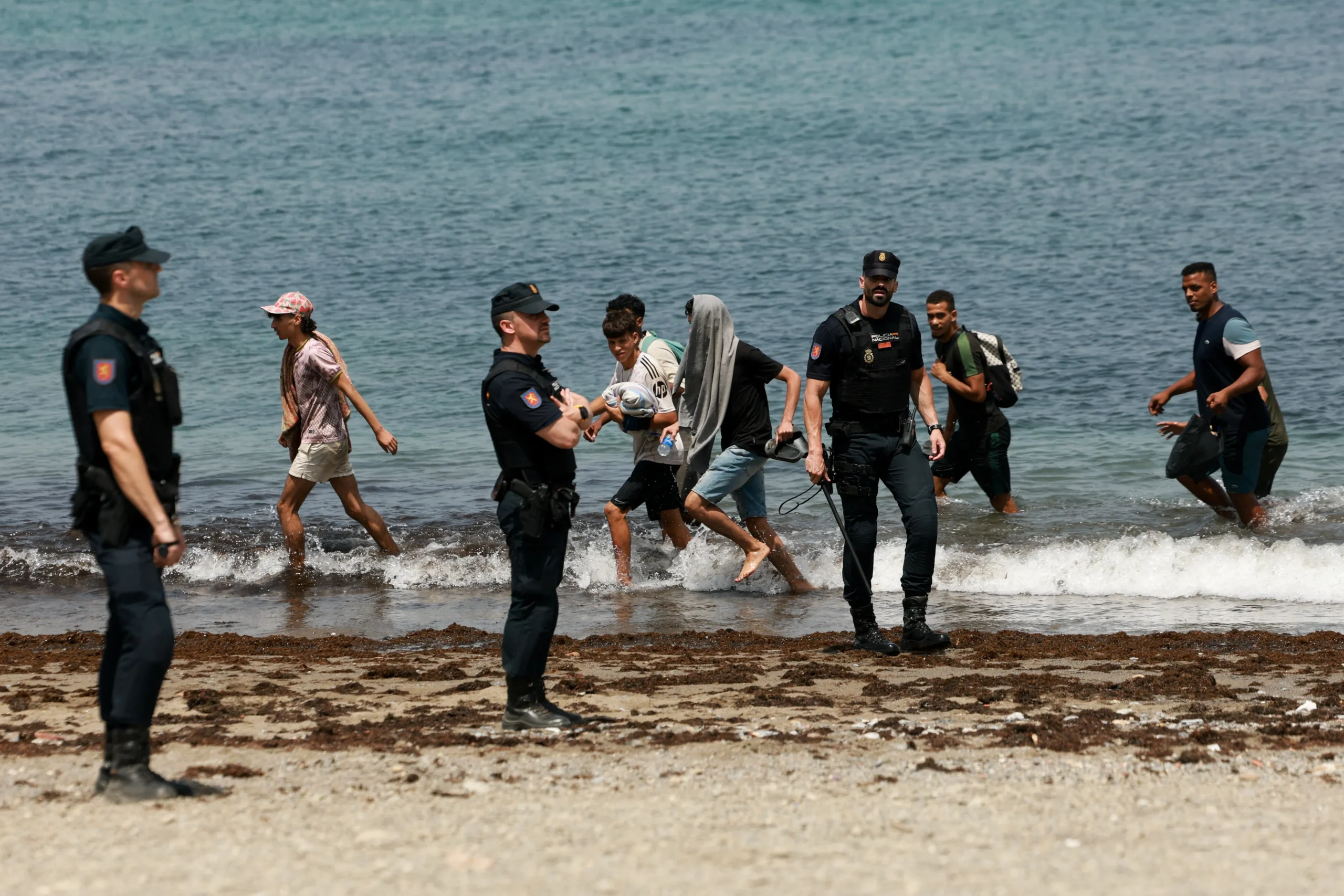
Migrants try to make their way past Spanish police officers, following recent mass crossings of migrants on foot and by sea from Morocco into Spanish territory, in Ceuta, Spain, August 1, 2026. REUTERS/Violeta Santos Moura -
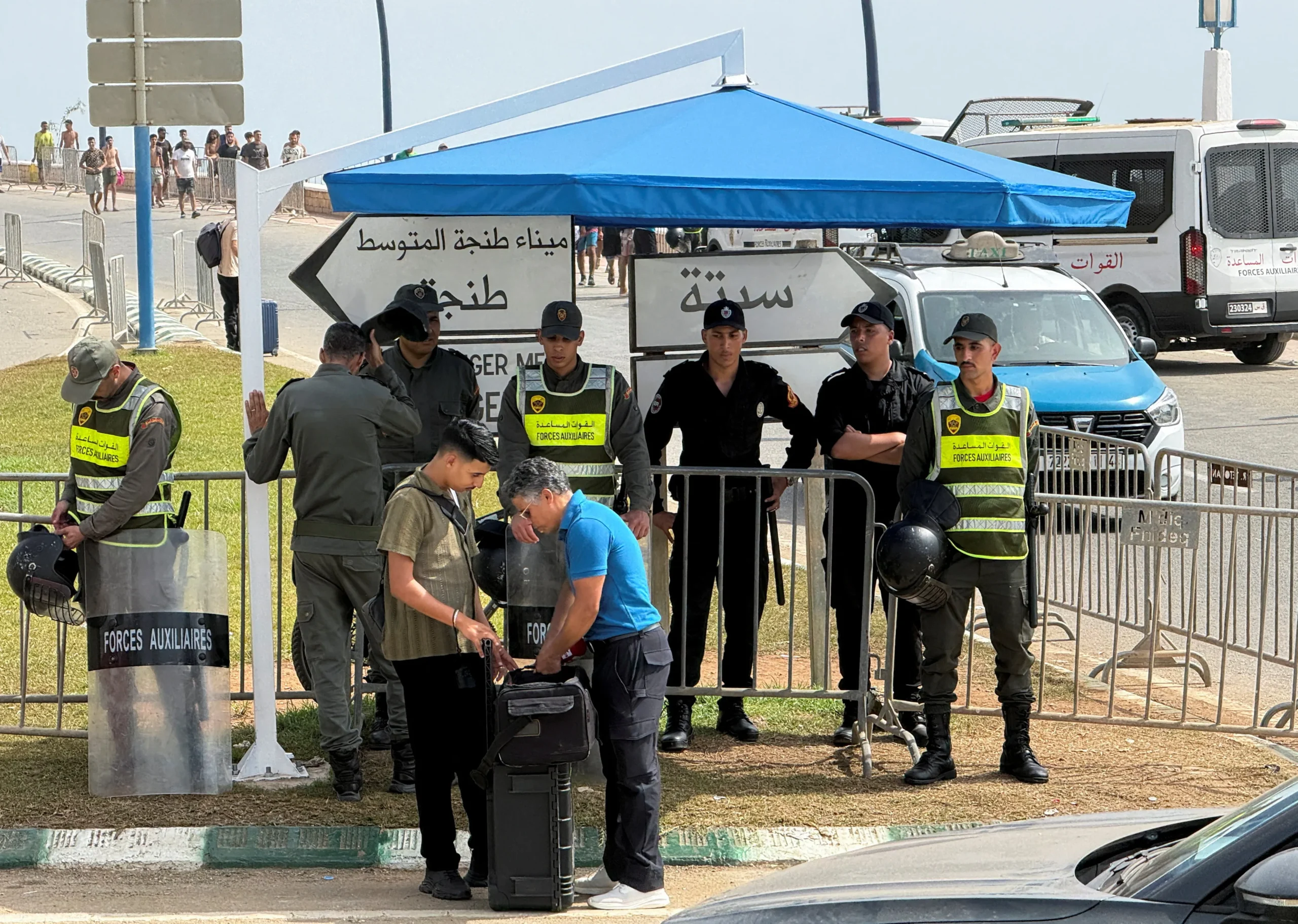
Security forces stand guard in Fnideq, Morocco, August 1, 2026, as migrants gather after crossing from the Spanish enclave of Ceuta to the Moroccan side of the border. Picture taken using a mobile phone. REUTERS/Stringer -
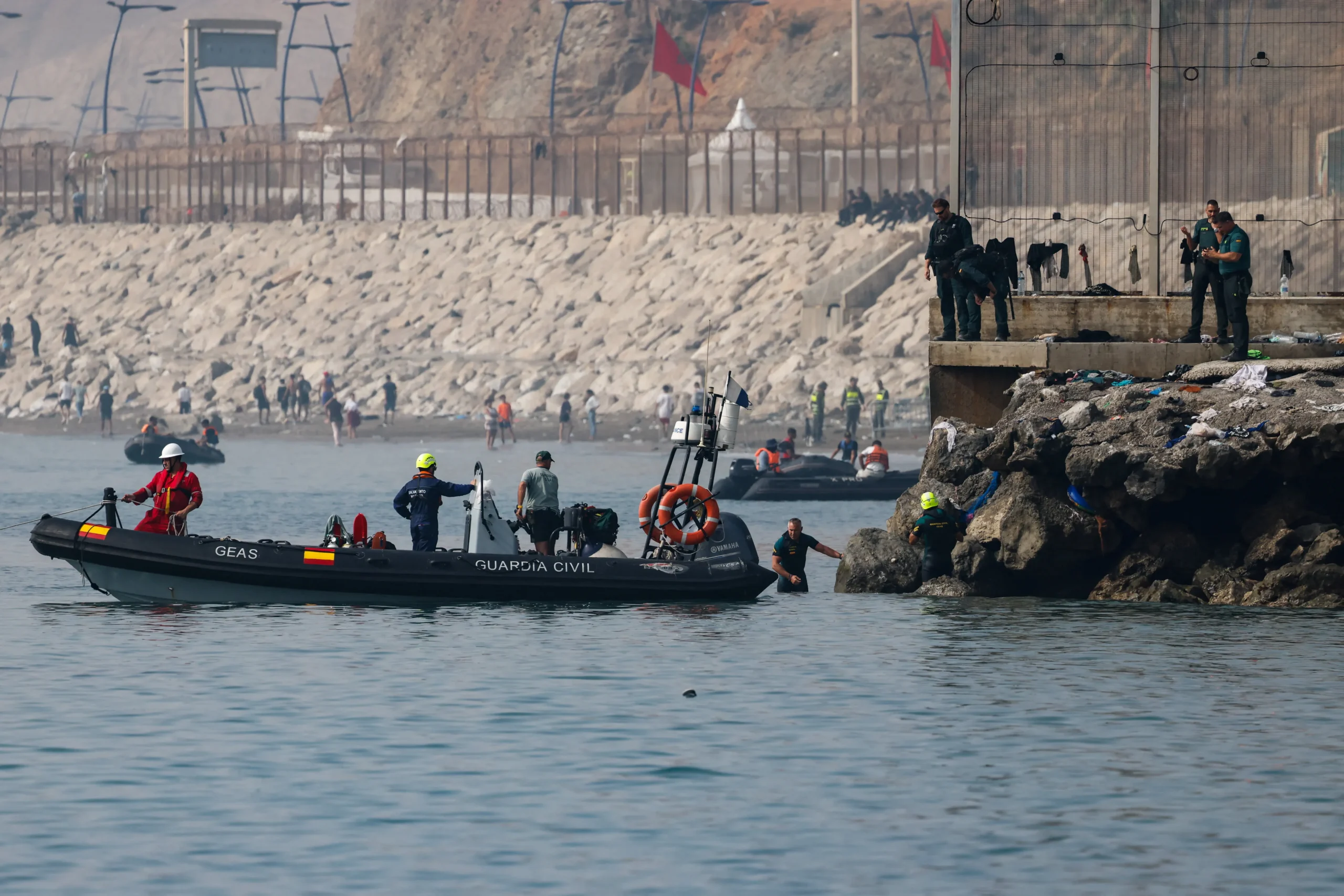
A Spanish Guardia Civil boat in Ceuta, Spain, following mass crossings of migrants on foot and by sea from Morocco into Spanish territory, August 1, 2026. REUTERS/Jon Nazca -
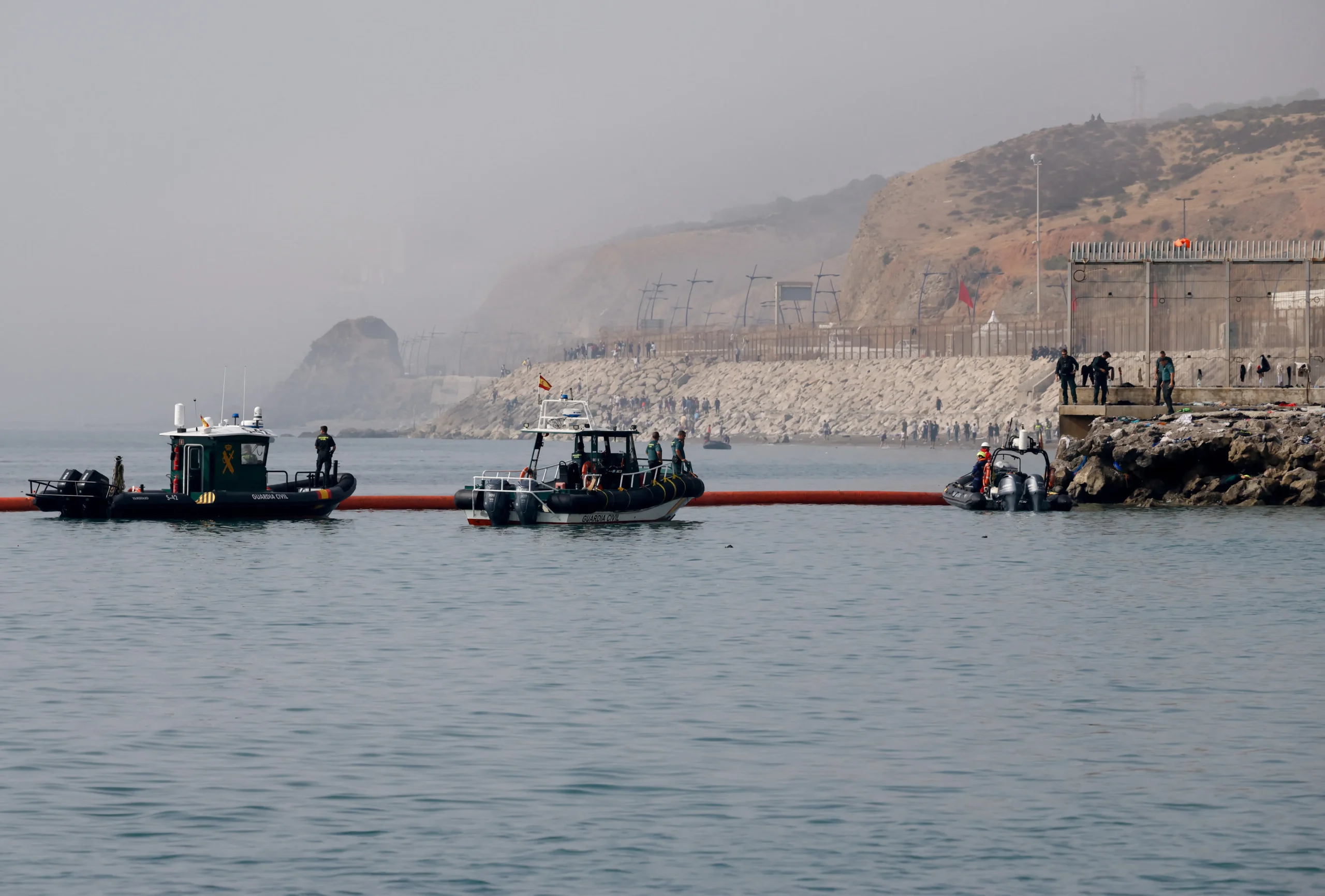
Spanish Guardia Civil boats in Ceuta, Spain, after mass crossings of migrants on foot and by sea from Morocco into Spanish territory, August 1, 2026. REUTERS/Jon Nazca
Italian Prime Minister Giorgia Meloni wrote that “the images arriving from Ceuta have once again demonstrated how urgent it is for Europe to respond to illegal immigration.” She said Italy and Denmark had promoted a letter signed by 22 EU member states calling for joint action to strengthen external borders, combat irregular migration, fight traffickers, make returns more effective and “eliminate any factor that could incentivize new illegal entries.”
The surge followed a Spanish Supreme Court ruling that migrants intercepted at sea while trying to reach Ceuta or Melilla cannot be returned immediately to Morocco without due process. Spanish officials have suggested the ruling may have contributed to the crossings, though some migrant advocates questioned whether many of those attempting the journey would have known about the decision.
Round out your reading
- What does low water at the Hoover Dam mean for power in the American West?
- Could GLP-1 drugs become the first longevity medications? Scientists think it’s possible.
- ChatGPT told him he wouldn’t face charges. Then came the arrest warrant.
- How one small city built a second act as a bio hub inside empty cigarette factories.
- If permanent Daylight Saving Time is so popular, why is it dead in the Senate?