This post was originally published on this site.
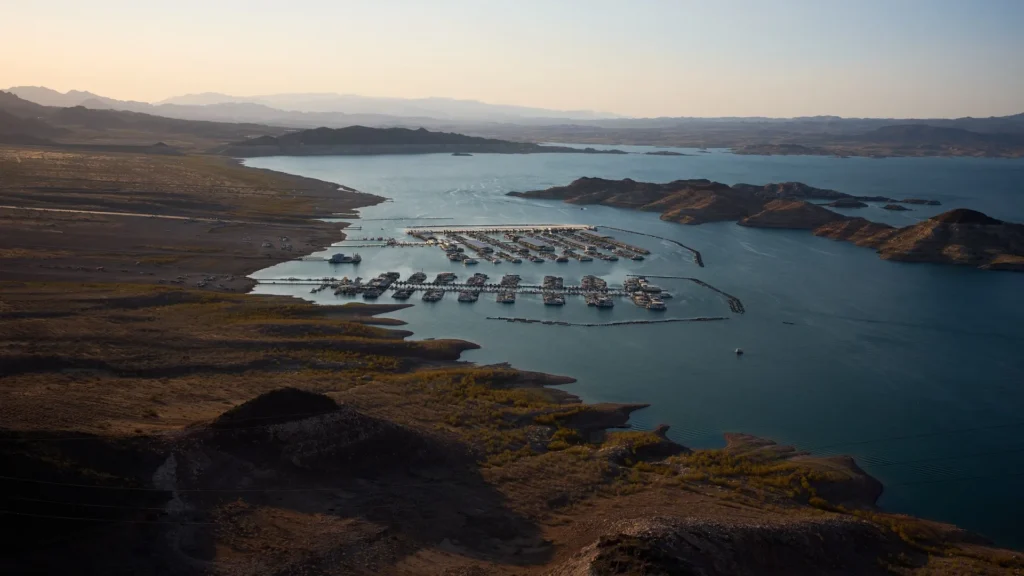
Arizona, California and Nevada may see significant water use restrictions over the next two years under a plan released Friday to manage the drought-stricken Colorado River.
The U.S. Bureau of Reclamation will require the three states to cut water usage by a combined 20% by 2028. As previously reported by Straight Arrow, agreements that delegated usage of the river’s water expire in 2026.
More than 40 million people use water from the Colorado River, which also fuels resources across seven U.S. states, 30 tribes and two Mexican states.
Those seven states are broken into two groups: the Upper Basin and the Lower Basin.
The Upper Basin includes Colorado, New Mexico, Utah and Wyoming. The Lower Basin includes Arizona, California and Nevada. The Upper Basin states do not face mandatory water usage reductions.
This new impact statement, the Bureau of Reclamation said, establishes a framework for “reliable operations in the Colorado River Basin while maintaining the flexibility to respond to changing conditions over a 10-year period through 2036.”
“The framework also preserves the opportunity for the Basin to continue working towards consensus agreements, and if successful, be incorporated into future operations,” the bureau said.
Operational thresholds provide for annual releases from Lake Powell between 5 million acre-feet and 12 million acre-feet; Lower Basin reductions of up to 3 million acre-feet; 8 million acre-feet and 3 million acre-feet of conserved water to be stored in Lake Powell and Lake Mead for future use; and voluntary reductions in the Upper Basin conservation of up to 200,000 acre-feet.
These reductions “would devastate Arizona’s water users and its economy,” the state’s Department of Resources said.
“We will continue to work with the federal government, as well as with our tribal, agricultural and municipal partners in Arizona, and the other Colorado River Basin states, to make river operations work for the betterment of all,” the Arizona Department of Water Resources said in a statement.
The new plan includes key thresholds and ranges for water releases from Lake Powell and Lake Mead, which will be reviewed and periodically updated.
Officials speaking on the condition of anonymity told The Washington Post that another document on the bureau’s first two-year operating plan, which includes the 20% Lower Basin cuts, is anticipated in the coming days.
Eleven people interviewed by The Post said the bureau’s approach is the best that could be achieved under current circumstances — but there still lies “significant uncertainty” about how much water communities will be receiving in the future.
“It ensures that we will be in a state of constant negotiation over the next two-year deal,” Anne Castle, who chaired the Upper Colorado River Commission during the Biden administration, told The Post.
Round out your reading
- What does low water at the Hoover Dam mean for power in the American West?
- Could GLP-1 drugs become the first longevity medications? Scientists think it’s possible.
- ChatGPT told him he wouldn’t face charges. Then came the arrest warrant.
- How one small city built a second act as a bio hub inside empty cigarette factories.
- If permanent Daylight Saving Time is so popular, why is it dead in the Senate?