This post was originally published on this site.
The Department of Justice said on Thursday that it’s withdrawing its subpoenas of three New York Times reporters who exposed security vulnerabilities with President Donald Trump’s new Air Force One jet.
The announcement came as Judge Arun Subramanian was considering a motion by The Times to reject the subpoenas, The Associated Press reported. The outlet reported that Subramanian said he would’ve approved The Times request since laws state that subpoenas targeting journalists should only be issued as a last resort in an investigation.
He noted that the government was required to ensure that it couldn’t obtain the information it needed from any other sources before it subpoenaed journalists, according to The AP.
“Subpoenas are not the first thing you do, they are the last thing you do,” Subramanian said in a court proceeding.
Why did the Trump administration subpoena journalists?
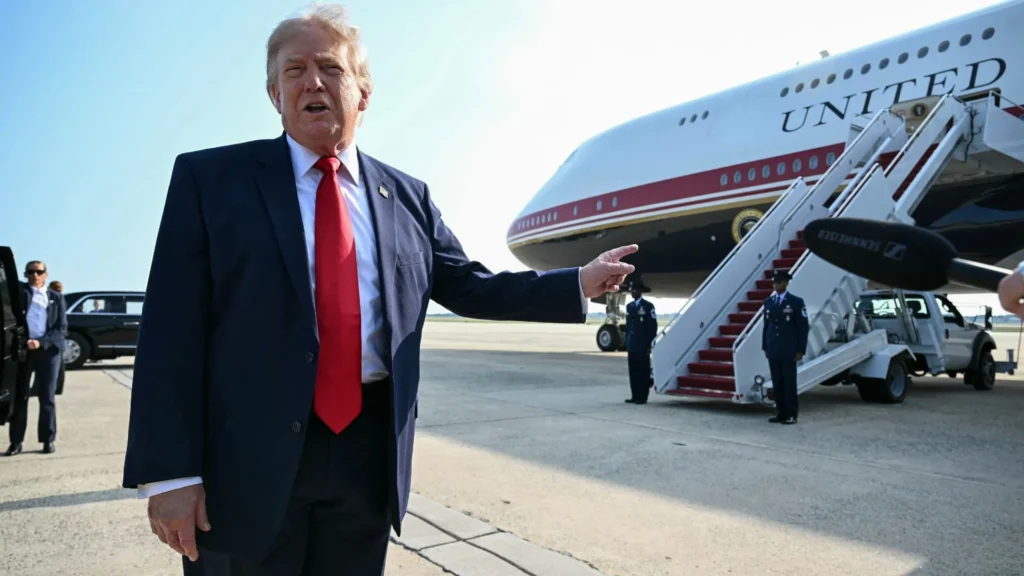
The jet that sparked The Times’ report and the following DOJ investigation was a $400 million Boeing 747-8 gifted to Trump by the Qatari government. The Middle Eastern state gifted the jet to the president in 2025 before delivering it to him in June. Trump said in January that he expected to take the plane on its inaugural voyage sometime this summer.
The Trump administration said it would upgrade it with various security features that other Air Force Ones in the president’s fleet had. Trump said the security upgrades would cost “probably less than $400 million.” But Democrats said that price tag was underestimated, stating the true costs could balloon to closer to $1 billion, Straight Arrow previously reported.
In early July, the president used the new jet to travel to Turkey for a NATO summit. But The Times reported that after the summit, he had switched jets and used an older version of Air Force One to travel back to the U.S. The paper said anonymous sources told them that the Secret Service had made the request. They said the Secret Service was worried that the new jet didn’t have the proper security features, like antimissile defenses, that other Air Force One jets had.
Following The Times’ report, the Trump administration announced it would seek subpoenas against the reporters of the story to find out who the anonymous sources in the article were. The Times also reported that the DOJ had issued subpoenas for the journalists’ phone and text records.
But the subpoenas went further than that, targeting the reporters’ families. Seth Stern, the chief of advocacy at the nonprofit Freedom of the Press Foundation, previously spoke to Straight Arrow, calling the addition of their families unprecedented.
“Even the Mafia says families are off limits,” said Stern, who noted he was unaware of previous administrations going to such lengths to reveal the identities of anonymous sources.
Response to the investigation
David McCraw, an attorney for The Times, told CNBC that the Trump administration’s subpoenas “should shock the conscience of any American who believes in the Constitution and the press freedom it protects.”
“This brazen act should be seen as nothing more than an attempt to prevent the public from knowing what is happening in their country by intimidating journalists from doing their jobs,” McCraw said.
The Trump administration disagreed with The Times’ framing of the subpoenas. Manhattan U.S. Attorney Jay Clayton, who issued the subpoenas and was nominated by Trump for director of national intelligence, didn’t believe the administration stepped on any press freedoms when he issued them.
“Let me say that I am confident that the procedures that we have in place to protect the First Amendment and protect the freedom of the press and not result in intimidation of journalists,” Clayton said during his testimony last week to the Senate Select Committee on Intelligence.
Round out your reading
- From Obama to Trump to Biden: When networks said ‘no’ to presidential speeches.
- ‘The end of American science as we know it.’ White House funding plan sparks alarm.
- AI data centers are popping up everywhere. What exactly do they do?
- The Trump administration is accused of breaking a law built to target the KKK.
- One Republican senator is dead, another is still alive. Both are the center of conspiracy theories.