This post was originally published on this site.
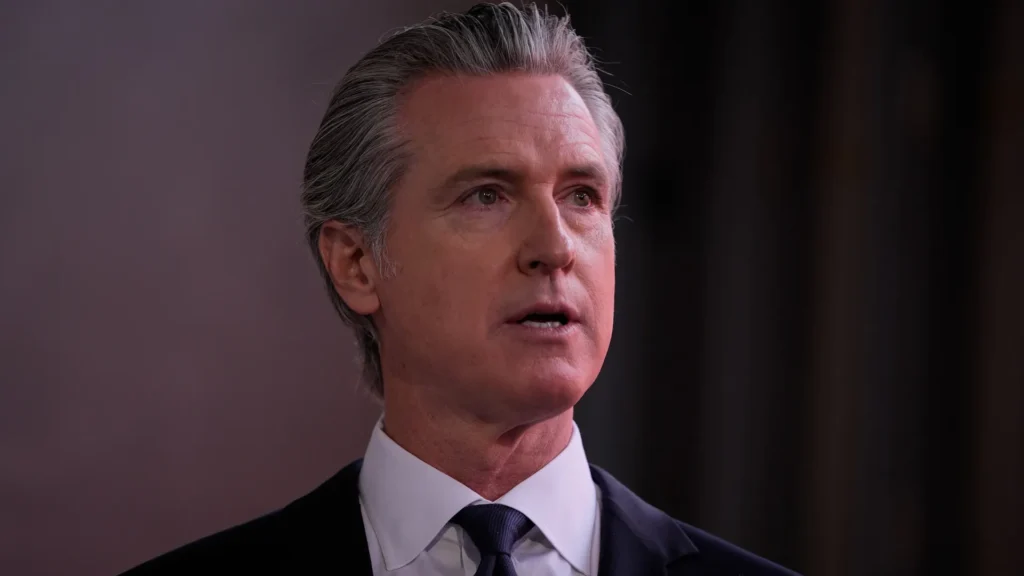
At a time when California officials say they’re short on revenue, one place they won’t see any new money from is two new casinos coming to the state. Gov. Gavin Newsom announced the new compact with the Fort Mojave Indian Tribe allowing them to open two casinos in San Bernardino County, east of Los Angeles.
However, this new deal does not include revenue-sharing seen in previous compacts with Native American tribes.
“Because the Fort Mojave Tribe would not be subject to the same kinds of revenue sharing agreements and provisions that we’ve seen in California, one could argue that it’s a pretty good deal for the tribe, and represents potentially a new precedent that other tribes might be interested in as well,” Steve Light, a tribal gaming expert at UNLV, told Straight Arrow.
New gaming compact
This new compact replaces the one signed in 2004 and expired last year.
“These kinds of gaming compacts are required under federal law in order for a tribe to operate casino-style gaming within a state,” Kathryn Rand, also a tribal gaming expert at UNLV, told Straight Arrow.
The Fort Mojave reservation extends to parts of California, Arizona and Nevada, but this compact only applies to Golden State land.
The tribe will maintain control over the casino while being regulated by the state and federal government.
It also eliminates much of the revenue sharing the tribe has had to do under past agreements, and that many tribes are still doing.
“The state cannot tax the tribe’s gaming operation,” Rand said. “So, an alternative to that is a negotiated revenue sharing agreement, where the state offers something to the tribe, and the tribe is willing to pay some amount of its revenue for the value of what the state is offering.”
That’s not happening here, but it doesn’t mean the tribe isn’t paying anything.
The compact does require them to pay into certain gaming funds. Those funds support gambling regulation costs, programs to address gambling addiction and more.
“It’s not that the tribe isn’t contributing anything to the state,” Rand said.
The previous compact with this tribe also required them to put money into what was called the Revenue Sharing Trust Fund. That money would go to tribes that don’t operate casinos in the state.
However, in 2022 the state added the Tribal Nation Grant Fund, which is what the Fort Mojave Indian Tribe will now put money into.
This new fund also goes to tribes without casinos, but they must apply for it instead of just being given the funds.
“California has foregone the revenue sharing that it had in the past,” Light said.
Why?
As for why, there are a few possibilities.
The Department of the Interior, which oversees these compacts, changed certain regulations in 2024.
“That was the first time that the federal government set out regulations,” Light said.
Those changes included stricter scrutiny on what’s allowed in revenue sharing, including showing the state made enough concessions to justify that it’s worth the payments the tribe is making.
With stricter rules now in place, it’s also possible the state doesn’t see an alternative, especially after past issues.
Former Gov. Arnold Schwarzenegger negotiated significant revenue sharing with tribes when he led the state in the early 2000s. It got as high as 25%.
In 2010, his administration demanded the Rincon Band of Luiseño Indians pay a percentage of casino revenue into California’s General Fund, which is the main fund that pays for things like public schools.
However, a federal court ruled those payments were an impermissible tax.
“The federal regulations essentially require that the state offer up a valuable economic benefit to the tribe,” Rand said.
They found California stood to make some $38 million from the proposal they made to the tribe while the tribe would only net another $2 million from the state’s offer.
While California was not punished, it was made clear what the courts will allow and what they won’t.
“This may be California trying to comply with this new clarified law about what is okay for revenue sharing and what is not,” Light said.
CA money issues
Regardless of why or what the state can or can’t do, this comes at a bad time for California, where the state is already looking for additional revenue.
This November, voters in California will decide to approve a controversial one-time tax on billionaires.
The reason behind that proposal is an attempt to offset massive cuts to California’s healthcare system that came in President Donald Trump’s so-called “One Big Beautiful” bill.
However, economists aren’t sure this one-time tax would even solve that issue, and it’s pushing billionaires, who may not pay a lot in income tax but do in other taxes, out of the state.
The overall state budget is also facing a potential deficit worth tens of billions of dollars.
Following that Rincon decision in 2010, the amount of money the state gets from tribal revenue-sharing went way down.
The amount the state now gets towards its General Fund is extremely minimal when compared to the budget, as most of the money goes to the gaming funds and other tribes.
And while any amount helps at least a little, it won’t be coming from this new compact, which comes at a time of an uncertain future in California gambling.
“What are the implications for the future, especially in relation to other expansions of gaming, such as sports wagering?” Light said.
Sports betting companies are once again making a push to state and tribal officials to allow them to do business since prediction markets have already infiltrated the Golden State.
Prediction markets could be the one place where a lot of major players like the state and tribes could be on the same page.
“Tribes are very concerned about prediction markets, the same way that commercial casinos are very concerned about prediction markets,” Rand said. “So, the interests of tribes and commercial gaming interests and state regulators are aligning in large part on the question of prediction markets and how they should be regulated.”
Round out your reading
- From Obama to Trump to Biden: When networks said ‘no’ to presidential speeches.
- ‘The end of American science as we know it.’ White House funding plan sparks alarm.
- AI data centers are popping up everywhere. What exactly do they do?
- The Trump administration is accused of breaking a law built to target the KKK.
- One Republican senator is dead, another is still alive. Both are the center of conspiracy theories.