This post was originally published on this site.
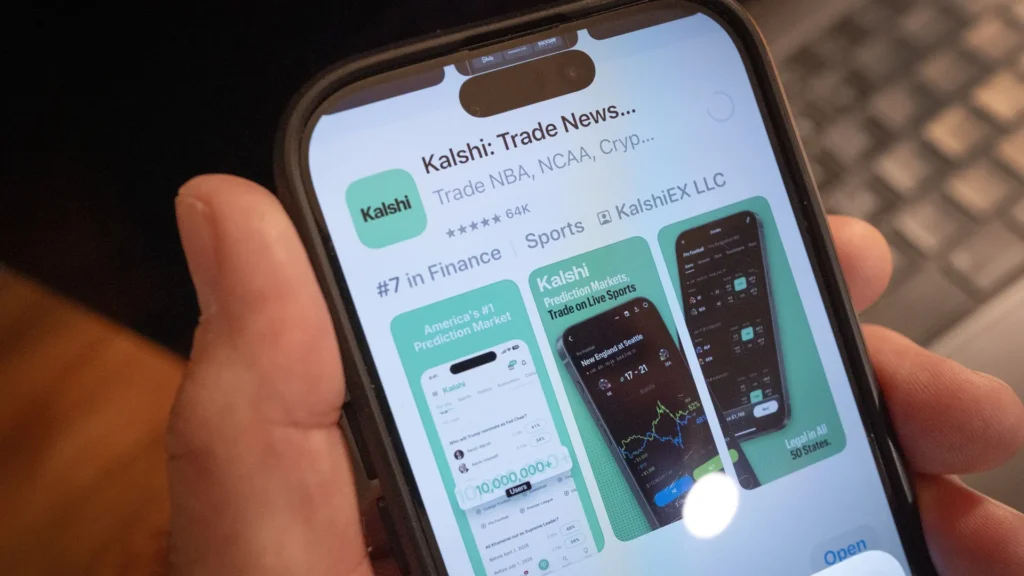
New York is suing Kalshi, alleging the prediction market operates an illegal, unlicensed gambling platform. It comes after a federal court ruled that New York could enforce its gambling rules on Kalshi.
Gov. Kathy Hochul and Attorney General Letitia James announced Friday they filed a lawsuit seeking a court order to block Kalshi from operating in New York and require the company to pay fines and restitution to users.
The lawsuit argues Kalshi’s prediction markets meet New York’s legal definition of gambling because outcomes depend more on chance than skill. They also say Kalshi exposed New York residents, including those younger than the state’s legal gambling age of 21, to “serious personal and financial risk.”
“New York’s gambling laws protect children from underage betting and help combat gambling addiction,” James said in the statement. “No matter what they call themselves, prediction makers like Kalshi are gambling platforms, plain and simple.”
The lawsuit also alleges Kalshi never obtained a state gaming license and avoided taxes paid by licensed casinos and mobile sportsbooks.
Lawsuit could cost Kalshi $36B
In a petition filed with the New York Supreme Court, James and Hochul are asking a judge to bar Kalshi from operating an illegal gambling business in the state. The lawsuit also seeks a court order demanding that Kalshi submit to state regulators and taxes, forfeit illegal profits and pay penalties equal to three times its gains, as well as $100,000 for each offering — which state officials estimate could cost Kalshi about $36 billion, according to a statement of facts accompanying the lawsuit.
“Kalshi has chosen to ignore New York’s gambling laws, which exist to protect consumers, prevent problematic gambling, deliver funding for critical public services and ensure that every company plays by the same rules,” Hochul said.
The lawsuit does not seek to close down Kalshi altogether.
Kalshi pushes back

Unbiased. Straight Facts.TM
Kalshi is currently valued at $22 billion, according to a Forbes estimate.

Kalshi argues its contracts are federally regulated and that states have no authority over them.
“It’s sad to see this type of political theater from the leadership in our own state,” Elisabeth Diana, Kalshi’s Head of Communications, told ABC News. “States can’t just shut down a federally licensed exchange. This would also hurt New Yorkers, who would be driven offshore. We love New York, we love New Yorkers, and New Yorkers love our product.”
Prediction market companies argue they’re not gambling operation platforms because users trade contracts against one another — similar to stock markets — while the companies collect transaction fees, according to The Associated Press.
The Commodity Futures Trading Commission also maintains it, not the states, has sole authority to regulate prediction markets. The agency has filed for a temporary restraining order to halt New York’s lawsuit and has brought similar legal actions against other states.
Other states take action against Kalshi
It’s not just New York taking action against Kalshi. Just last week, a Washington court granted a request to temporarily block Kalshi from offering sports-related event contracts in the state, saying they constitute illegal gambling activities under state law.
A Michigan judge last month issued a temporary restraining order, blocking Kalshi from offering sports-related event contracts in the state.
It’s a different story in Minnesota. This week, a judge there blocked the state from enforcing its new law banning prediction markets.
Round out your reading
- What does low water at the Hoover Dam mean for power in the American West?
- Could GLP-1 drugs become the first longevity medications? Scientists think it’s possible.
- ChatGPT told him he wouldn’t face charges. Then came the arrest warrant.
- How one small city built a second act as a bio hub inside empty cigarette factories.
- If permanent Daylight Saving Time is so popular, why is it dead in the Senate?