This post was originally published on this site.
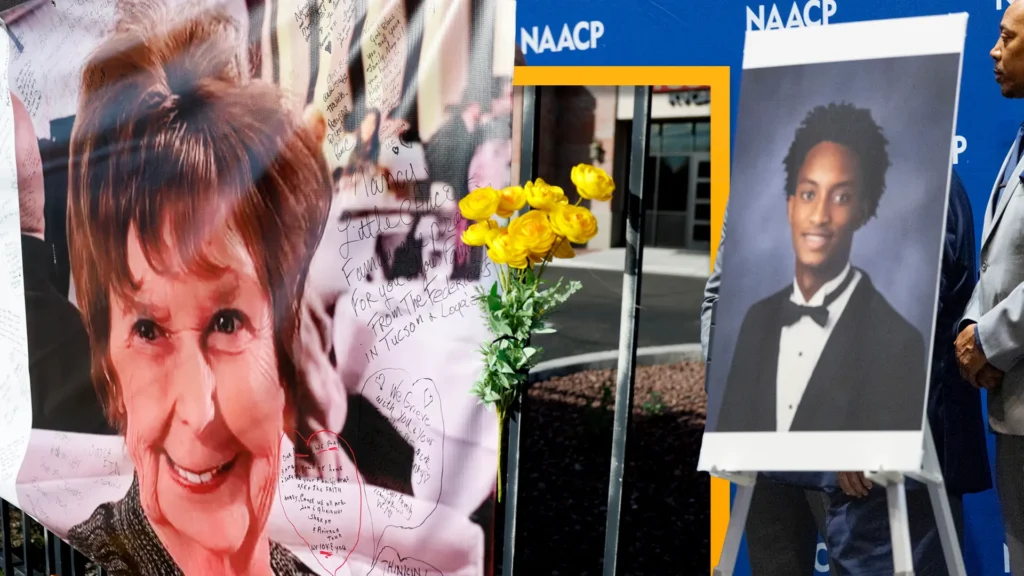
Nolan Wells died around July 4. Nancy Guthrie disappeared on Feb. 1. Their cases are unsolved as their families plea for answers and social media latches onto theories or possible evidence to give closure. A police officer tells Straight Arrow unsolved cases aren’t uncommon, but how they’re cared for can help future investigations.
The last update about Guthrie’s disappearance came Thursday from FBI Director Kash Patel, who claimed on Fox News that local law enforcement is responsible for not collecting surveillance footage quickly enough from Guthrie’s Nest camera. The case captivated the nation as Guthrie’s daughter Savannah, “Today” and NBC News anchor, pleaded online for help.
Five months have passed with virtually no new information, and Glynn County Police Department Captain Tim Hegarty said it’s not an anomaly.
“It is not uncommon for there to be a cold case or for there to be an unsolved case,” he said. “The larger the population sample, the more that you’re going to have.”
According to the Murder Accountability Project, there were 352,397 unsolved homicides as of March 2026. In 2024 — the last year of available data — 61% of homicides were solved. According to the National Missing and Unidentified Persons System, there are 15,510 unidentified persons and 23,485 unclaimed persons cases in the U.S.
A case can go unsolved and become cold for a combination of reasons, he said. That included lack of physical evidence, eyewitness testimony, digital footprints and information about the person or potential suspects.
“For example, you may have, in the case of a death that you’re trying to determine ‘is it a homicide or isn’t,’” he said. “You may have a bruise on the forehead, but it’s nothing beyond that without an additional piece of information.”
Treating all deaths as investigations
A possible resolution for unsolved cases is for law enforcement to treat every suspicious death as a homicide, Hegarty said, which could trigger intricate crime scene preservation protocols.
He cautioned police departments to be careful with how they word the alerts so they don’t cause public alarm, but instead let the public know there’s an unintended death investigation.
“That’s a mindset that has to be in place with the first officer on the scene,” he said.
In the case of Guthrie, it would require taking as many photos as possible, getting detailed descriptions of her home and acquiring surveillance footage as soon as possible. In the case of Wells, an 18-year-old who died following a July 4 outing with friends, it’s unknown what preservation tactics could have been used.
For the public, he said it boils down to the trust they have in police. A 2024 Gallup poll of 1,005 U.S. adults revealed that only 51% of respondents had either a “great deal” or “quite a lot” of trust in the police. The pollster conducts the survey nearly every year, with results teetering between 64% in 2004 and 43% in 2023.
Part of that trust could be rebuilt with police communicating with the public that certain details cannot be shared to retain the investigation’s integrity.
“And therefore, It’s not unusual for the public and for the media to fill in the gaps with information that may or may not be true,” he said.
News media’s role in cold cases
The reality of cold cases is that they are a part of life, Hegarty said. But how they’re portrayed and reported on in the media can affect that perception.
True crime podcasters have an effect as they follow high-profile crimes and create hysteria over case details. That happened in May when influencer Alec Wysopal found a bone near Guthrie’s home. His YouTube channel has been restructured to focus on Guthrie, often showing him walking around Arizona and speaking with people in hopes he’d find a break in the case.
The bones were around 750 years old.
Wysopal isn’t alone. Police said online rumors are affecting the investigation.
Hegarty said people need to be mindful of when they’re reading sensational stories, or ones backed by facts. A way to distinguish is paying attention to how often the cases are being reported.
“Over the course of a year, if it averages one a day in the news and each one was different, then you’re getting some signal in there,” he said. “But one every couple of months or a couple a year, that’s noise.
Losing a loved one doesn’t mean their deaths will go cold. Hegarty said the same reasons why cases can go cold apply to how they can be resolved years, sometimes decades, later. A major factor is advancements in technology allowing law enforcement to test recovered DNA and either locate the person or suspect, or a family member of either.
The other upside? Cold cases aren’t that common.
“Most cases don’t go cold,” he said. “Most cases do get solved.”
Round out your reading
- What does low water at the Hoover Dam mean for power in the American West?
- Could GLP-1 drugs become the first longevity medications? Scientists think it’s possible.
- ChatGPT told him he wouldn’t face charges. Then came the arrest warrant.
- How one small city built a second act as a bio hub inside empty cigarette factories.
- If permanent Daylight Saving Time is so popular, why is it dead in the Senate?