

China’s Central Commission for Discipline Inspection (CCDI) announced on July 19 that Ouyang Weimin, former president and deputy party secretary of the China Development Bank (CDB), is under investigation for suspected serious violations of party discipline and the law. Typical of Chinese Communist Party (CCP) purges, no further information was given.
Ouyang joined the Chinese Communist Party in 1986 and spent much of his early career at the People’s Bank of China before serving as vice governor of Guangdong. He was appointed CDB president and deputy party secretary in 2019 and stepped down as president in 2023. CDB, founded in 1994, is a state-funded development finance institution overseen directly by the State Council.
In a separate action, a former CDB vice president was sentenced in 2024 to 12 years in prison and fined for accepting bribes. A second CDB official, Liang Qingkai, former party secretary and president of CDB’s Hunan branch, was placed under investigation the same day. This detail has only a single Chinese-language source and has not been independently confirmed.
Ouyang’s case fits into a broader pattern of purges across the China Development Bank (CDB) and other state-owned financial institutions. The CCP has punished or opened investigations into at least nine CDB executives for graft in a single year, with several accused of accepting bribes in exchange for approving loans.
Former CDB chairman Hu Huaibang helped CEFC China Energy and HNA Group obtain billions of dollars in credit. Both companies later collapsed into insolvency or restructuring. Former CDB vice president He Xingxiang was placed under investigation in September 2021, and former Yunnan branch president Hong Zhenghua was investigated the same year.
The South China Morning Post reported that more than 30 regulators and bankers were detained in a single year as part of the broader financial-sector crackdown. Analysts said investigators were targeting officials accused of approving loans in exchange for kickbacks, and more than a dozen senior executives at China’s largest financial institutions were investigated during the same period.
Taken together, the cases involving Hu Huaibang, He Xingxiang, Hong Zhenghua, Ouyang Weimin, and the unconfirmed investigation of Liang Qingkai suggest a recurring pattern in which CDB executives allegedly approved loans in exchange for bribes. In at least one documented case, the CEFC and HNA credit lines, the lending went to companies that later defaulted or entered restructuring.
Bad loans of this kind likely stem from a mix of factors: personal enrichment by officials approving the loans, poor planning, and pressure from the central government to inflate the overall scale of the Belt and Road Initiative (BRI) so that reported totals remain large.
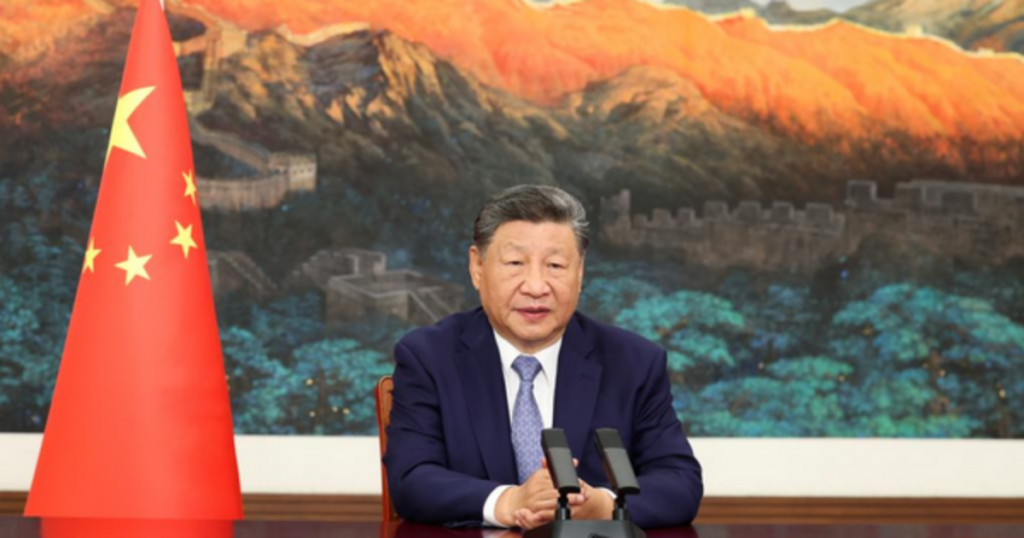
Xi Jinping treats “financial security” as central to national security, and the financial sector crackdown reflects this view. Combined with broader state paranoia, it could further weaken business confidence among domestic and foreign investors.
The purge also raises the risks associated with senior banking positions in China. Despite that, opportunities for corruption will likely continue to attract some officials. For foreign investors, the crackdown adds another layer of uncertainty: loans may go unrecovered, or the officials who approved them may later be arrested.
China’s net investment position, measured by foreign direct investment into China versus outbound investment, turned negative about a year and a half before this writing. It remains very low. U.S. tariff policy under President Trump has further reduced China’s attractiveness to investors.
2026 growth projections run as low as 4.5% GDP, among the lowest on record outside the COVID period. Beijing is likely to report a figure closer to 5% regardless.
China’s official unemployment rate is about 5%. Youth unemployment is officially 16% to 18%. That figure excludes students, many of whom enrolled in school because they could not find jobs, and people absorbed into training programs for the same reason.
Real youth unemployment may be closer to 20%, consistent with the 21% to 23% peak recorded before Beijing stopped publishing the metric. It is likely higher today, given the tens of millions of university graduates entering the workforce without a matching rise in jobs.
An estimated 200 million to 400 million migrant workers remain registered as employed under the hukou system, some earning under $100 a month. Their work depended on a construction sector that has since slowed sharply. Construction accounts for at least 20% of the Chinese economy and depends directly on available financing.
Reduced investment limits factory construction, while U.S. tariffs restrict market access. The overall trajectory is continued economic slowdown rather than collapse.
CDB is one of China’s two principal financiers of overseas infrastructure and Belt and Road Initiative (BRI) projects, with estimated lending commitments of roughly $100 billion, the largest of any single Chinese institution.
Chinese banks’ balance sheets are burdened with doubtful loans, leaving little room for BRI-scale lending. New Chinese loan commitments have remained flat at about $7 billion annually since 2023, roughly one-quarter of the volumes seen during the initiative’s peak in the 2010s. It also found that China has shifted from a net provider of financing to developing countries to a net drain, with debt repayments now exceeding new disbursements.
With the United States positioned to gain control over Iran’s oil, that investment is unlikely to benefit China, compounding losses already tied to failed loans and corruption cases. Because no official BRI project list exists, Beijing can characterize any individual completed project as a success regardless of the initiative’s overall performance.
The post Xi Jinping’s Bank Purges Could Have a Negative Impact on China’s Economy appeared first on The Gateway Pundit.